

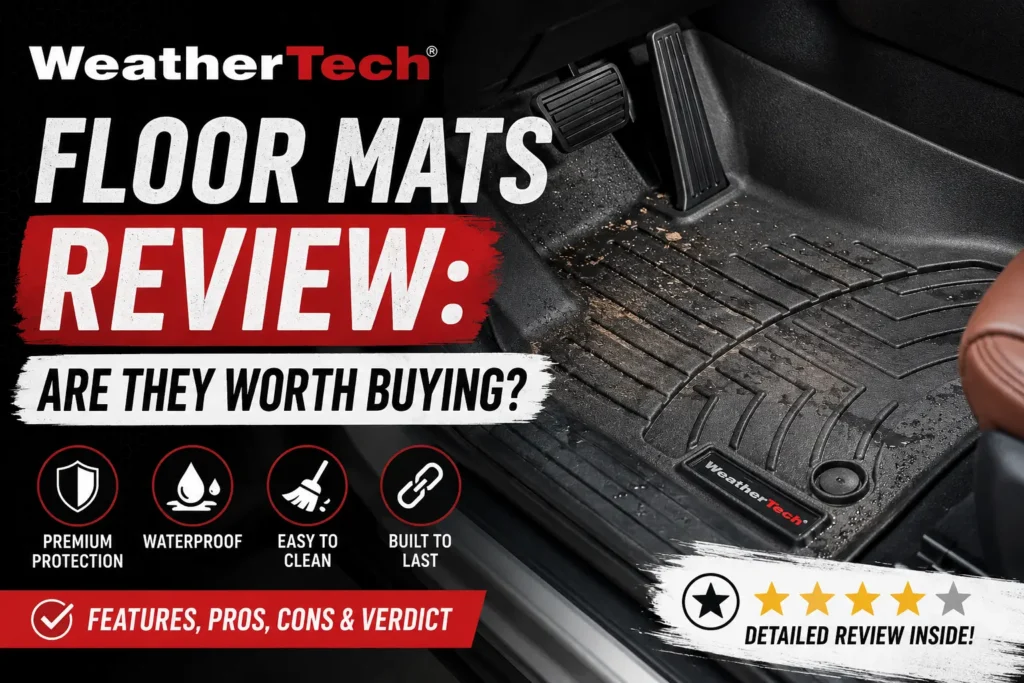
If you’ve spent any time researching car floor protection, you’ve almost certainly run into the name WeatherTech. It’s the brand that keeps popping up in forums, YouTube reviews, and “best floor mats” roundups, often praised — and sometimes gently criticized — with equal enthusiasm. But with prices that can run two to three times higher than a generic set of rubber mats, it’s fair to ask: are WeatherTech floor mats actually worth the money?
This WeatherTech floor mats review breaks down everything you need to know before buying — the fit, the materials, the pricing, the durability, and how the brand stacks up against cheaper alternatives. Whether you’re protecting a brand-new SUV or trying to keep a decade-old sedan’s carpet from turning into a science experiment, this guide will help you decide if WeatherTech deserves a spot in your vehicle.
What Are WeatherTech Floor Mats?
WeatherTech is an American company best known for its FloorLiner and All-Weather Floor Mats product lines. Unlike universal rubber mats you might find at a gas station or big-box store, WeatherTech mats are designed using laser measurements of your vehicle’s exact floor contours. The company scans factory floor pans, wheel wells, and pedal areas for thousands of vehicle makes, models, and trim years, then produces a mold that matches that specific footwell almost perfectly.
There are two main product lines worth understanding before you buy:
- WeatherTech FloorLiner (DigitalFit): A rigid, tray-style liner made from a proprietary High-Density Tri-Extruded (HDTE) material. It wraps up the sides of the footwell and includes raised edges designed to contain spills, mud, and snowmelt.
- WeatherTech All-Weather Floor Mats: A more flexible, traditional flat-style rubber mat, generally more affordable than the FloorLiner but with less aggressive edge containment.
There’s also the newer FloorLiner HP line, a heavier-duty version aimed at trucks, off-road vehicles, and owners who deal with serious mud, gravel, or job-site debris on a regular basis.
How WeatherTech Floor Mats Are Made
The manufacturing process is a big part of what separates WeatherTech from cheaper competitors. Instead of relying on a “one-size-fits-most” universal mold, WeatherTech uses advanced laser measurements to create a precise fit for every vehicle model, so the liners cover every inch of the floor space whether you drive a rugged 4×4 or a standard sedan. That level of precision is why WeatherTech mats tend to hug the floor pan, pedal area, and transmission hump so closely compared to mats you’d find at an auto parts store.
The material itself matters too. WeatherTech’s proprietary HDTE compound is engineered to withstand extreme temperature swings, from sweltering heat to freezing cold, which is a meaningful advantage if you live somewhere with real seasons rather than a mild year-round climate.
WeatherTech Floor Mats: Key Features
1. Custom, Laser-Measured Fit
This is the single biggest selling point. Because the mats are digitally modeled to your exact vehicle, there are no awkward gaps around the pedals, no mat sliding into the accelerator, and no bunching against the door sill. For anyone who has dealt with a universal mat riding up under the brake pedal, this alone can be worth the upgrade.
2. Deep Containment Channels
The FloorLiner’s raised, channeled design is built to trap liquid and debris rather than let it slosh around your feet. Surface channels carry liquids and debris to lower points on the mat, which keeps you from dealing with standing water and makes it easy to clean and remove dirt from the mat’s reservoir. If you’re hauling kids with spill-prone drink cups, muddy hiking boots, or wet dog paws, this containment design does a lot of the heavy lifting.
3. Anti-Slip Retention
WeatherTech includes a fastening system to keep the driver’s-side mat from creeping toward the pedals — a genuine safety consideration, not just a comfort feature. The front driver-side mat has a secure plastic button that snaps the mat into place so it doesn’t move, giving stability while driving.
4. Configuration Options
Buyers can typically choose between a single front mat that spans the entire footwell — including the center hump — or two separate driver/passenger mats. Individual mats tend to be easier to remove and clean, while the one-piece option offers a cleaner, uninterrupted look. Full-coverage cargo and second/third-row liners are also available for SUVs and trucks.
5. Easy Maintenance
Because the material doesn’t absorb liquid the way carpet does, cleanup is typically as simple as pulling the mats out, rinsing or wiping them down, and letting them dry — no scrubbing stains out of fibers.
WeatherTech Floor Mats Pros and Cons
No product is perfect, and WeatherTech is no exception. Here’s a realistic breakdown based on owner experiences and independent testing.
Pros
- Exceptional fit precision: The laser-scanned design genuinely outperforms universal mats in most vehicles.
- Outstanding spill and mud containment: The raised lip and channel system handle real-world mess far better than flat mats.
- Built to last: Owners frequently report years of daily use without cracking, fading, or losing shape.
- Straightforward installation: Despite the custom fit and durable construction, the liners are relatively simple to install and remove, without requiring extra tools.
- Strong resale/appearance value: A clean, factory-like look that doesn’t scream “aftermarket accessory.”
Cons
- Premium pricing: You’ll pay noticeably more than a generic rubber mat set, and the gap widens if you add cargo liners and second-row coverage.
- Can feel slippery when wet: Because the FloorLiner’s surface is closer to rigid plastic than soft rubber, some owners find that shoes can slide around when covered in rain or snow, which creates a less secure feeling — particularly noticeable with smooth-soled shoes.
- Possible edge curling over time: In some cases, temperature swings can cause the material to develop a “memory” that pulls the edges away from the door sill over time, leaving an unsightly gap that’s difficult to fully reverse.
- Relies heavily on factory clips: Because the underside is largely smooth rather than nibbed, the mats depend on the vehicle’s factory retention clips to stay put, so a broken or missing clip can lead to shifting.
- Utilitarian aesthetic: The functional, tray-like look isn’t going to appeal to buyers who prefer the plush feel of carpeted mats.
Is WeatherTech Worth the Price?
WeatherTech floor mats aren’t cheap, and that’s usually the first objection potential buyers raise. Pricing on WeatherTech’s own site and major retailers commonly lands in the $50–$70 range for a basic front-row All-Weather Mat set, with FloorLiner DigitalFit sets typically running higher, and premium FloorLiner HP kits for trucks and SUVs priced higher still once you factor in cargo liners and additional rows.
Compare that to a $20–$25 universal rubber mat set from a big-box store, and the price difference is real. But the calculation changes when you consider:
- Longevity: Many owners report 5+ years of daily use without needing a replacement, which spreads the cost out significantly.
- Resale value protection: A vehicle with pristine, mud- and stain-free carpet under the mats tends to hold value better at trade-in or resale.
- Reduced cleaning time: Less time vacuuming embedded dirt out of carpet fibers.
For anyone who needs serious protection, the pros of a flawless fit, superior durability, and easy cleaning tend to outweigh the cons of the higher price and more utilitarian look. If you drive a work truck, live somewhere with harsh winters, have kids or pets, or simply plan to keep your vehicle for many years, the math tends to favor WeatherTech. If you lease your car for two or three years and rarely deal with mud, snow, or spills, a cheaper universal mat might be the more sensible choice.
WeatherTech vs. Other Floor Mat Brands
WeatherTech isn’t the only player in the custom-fit floor liner space anymore. Competing brands like Husky Liners, Lasfit, 3D MAXpider, and SMARTLiner have all released laser-measured products aimed squarely at WeatherTech’s customer base.
WeatherTech vs. Lasfit: One of the more direct rivalries in this space comes down to material philosophy. WeatherTech’s floor liners use a firm, structured TPE material designed to maintain shape and durability, emphasizing rigidity and strength that many drivers associate with long-lasting protection. Lasfit, on the other hand, uses a more flexible TPE blend designed to adapt to the vehicle floor’s contours, which many drivers find makes installation and removal more convenient. Neither approach is objectively better — it comes down to whether you prioritize rigid structure or flexible convenience.
WeatherTech vs. Husky Liners: Husky Liners is frequently cited by budget-conscious buyers as a strong alternative, with some owners reporting comparable fit and containment at a lower price point, along with a softer, less rigid feel underfoot.
WeatherTech vs. universal rubber mats: This isn’t really a fair fight. Universal mats are cheaper and easier to find, but they can’t match the laser-measured fit, edge containment, or longevity of a vehicle-specific liner system.
The bottom line: WeatherTech remains the benchmark that newer brands are measured against, largely because of its manufacturing precision and reputation for durability — but it’s no longer the only credible option if budget is a primary concern.
Who Should Buy WeatherTech Floor Mats?
WeatherTech makes the most sense for:
- Parents driving kids to school, sports practice, and everywhere in between
- Pet owners dealing with muddy paws and shedding
- Truck and SUV owners who haul gear, tools, or work equipment
- Anyone living in a region with heavy rain, snow, or road salt
- Drivers planning to keep their vehicle long-term
- Buyers who care about resale value and interior condition
It may be less essential for:
- Short-term lessees planning to return the vehicle in two to three years
- Drivers in consistently dry, mild climates with minimal mess exposure
- Anyone on a tight budget who just needs basic floor coverage
How to Choose the Right WeatherTech Mats for Your Vehicle
- Confirm your exact trim and year: Floor pan shapes can differ even within the same model generation, so double-check fitment against your VIN or trim level before ordering.
- Decide between one-piece or split front mats: Split mats are easier to remove individually for cleaning; one-piece mats offer a more seamless look.
- Consider full coverage: Adding second-row, third-row, and cargo liners extends protection to the entire cabin, which matters most for SUV and minivan owners.
- Pick FloorLiner vs. All-Weather Mats based on use case: Choose the rigid FloorLiner for maximum containment and off-road/work-truck use; choose the flexible All-Weather Mats for a lower-cost, everyday-driving solution.
- Factor in installation: Both product lines are designed for tool-free installation, so you shouldn’t need professional help.
Maintenance Tips to Extend the Life of Your WeatherTech Mats
- Remove and shake out loose debris regularly rather than letting it compact into the reservoir channels.
- Rinse with water and mild soap; avoid harsh solvents that can degrade the material over time.
- Apply a UV protectant designed for plastics if your vehicle sits in direct sunlight often, since this can help keep the black finish from fading even though the material itself is fairly UV-resistant.
- Periodically check that factory retention clips are intact, since the mats depend on them for stability.
- For extra spill security on rugged trips, some owners place a small towel or moisture absorber in the deepest part of the reservoir.
A Closer Look at the Material Science Behind WeatherTech
It’s worth spending a bit more time on why WeatherTech’s material choice matters so much to the overall experience, since it explains both the brand’s biggest strengths and its most common complaints.
The HDTE (High-Density Tri-Extruded) compound used in the FloorLiner line is a thermoplastic elastomer blend engineered specifically for automotive interiors. Unlike a soft, pliable rubber mat, HDTE is formulated to hold a rigid, molded shape indefinitely — which is exactly how the liner manages to hug the contours of your specific footwell so precisely. That rigidity is a double-edged sword. On one hand, it means the mat won’t sag, stretch, or lose its custom shape over years of foot traffic the way a flexible mat might. On the other hand, rigid plastics are inherently less “grippy” underfoot than a textured rubber surface, which is where the wet-shoe slipperiness complaint tends to come from.
Temperature also plays a bigger role with rigid materials than with flexible ones. In extreme cold, most plastics contract and can become slightly brittle at the edges; in extreme heat, especially inside a closed vehicle baking in direct sun, materials can soften and are more prone to developing a “memory” if they’re bent or flexed repeatedly (for example, from being folded back during vacuuming). This is the underlying cause of the edge-curling issue some long-term owners report. It’s not a manufacturing defect so much as a predictable trade-off of choosing a rigid, structured material over a flexible one.
By contrast, WeatherTech’s All-Weather Floor Mats use a softer, more traditional rubber-like compound that flexes more naturally, trading some of that laser-precise rigidity for a more forgiving, carpet-like feel underfoot — closer to what you’d get from a competitor like Lasfit.
Installation Walkthrough: What to Expect
One of the most underrated aspects of WeatherTech mats is how little effort it takes to get them installed correctly. Here’s a general step-by-step of what the process typically looks like:
- Unbox and identify each piece: WeatherTech ships mats labeled by position (driver, passenger, rear) since each one is molded specifically for that footwell — they are not interchangeable side to side.
- Remove your factory or old mats: Vacuum the bare carpet underneath if needed, since dirt trapped beneath a new liner can eventually work its way to the surface.
- Locate your factory retention clips or anchors: Most modern vehicles have small posts or loops built into the carpet specifically for mat retention.
- Align the liner’s molded openings with the retention points: Because the mat is custom-shaped, this should line up naturally without forcing or stretching.
- Press down firmly around the edges: to seat the liner into the footwell contour, particularly near the pedals and center hump.
- Test pedal clearance: by pressing the brake and accelerator through their full range of motion before driving, to confirm nothing interferes with pedal travel.
The entire process for a front-row set typically takes less than ten minutes without any tools, which is a meaningful advantage over some competitor products that require trimming or adhesive backing.
Common Buyer Questions (FAQ)
Do WeatherTech floor mats fit every car?
WeatherTech maintains an extensive vehicle database covering the vast majority of mainstream cars, trucks, and SUVs sold in North America, going back many model years. However, very new releases, low-volume vehicles, or heavily modified interiors may not yet have a matching mold available, so it’s worth checking your specific year, make, model, and trim before ordering.
Will WeatherTech mats smell like plastic when new?
Some buyers report a mild rubber or plastic odor out of the box, which is common with TPE materials and typically fades within a few days of ventilation.
Can I trim WeatherTech mats to fit?
Generally, no — and you shouldn’t need to, since the entire value proposition is a precise factory-matched fit. If a mat doesn’t seem to sit correctly, double-check that you ordered the correct trim level and year, since footwell shapes can vary even within the same generation of a vehicle.
Are WeatherTech mats safe to use in vehicles with heated floors or heated seats wiring beneath the carpet?
WeatherTech mats sit on top of the existing carpet and don’t interfere with underlying wiring or heating elements in typical installations, but always consult your vehicle’s owner’s manual if you have any aftermarket flooring modifications.
How long does a typical WeatherTech mat last?
Many owners report 5 to 10 years of daily use without needing replacement, assuming reasonable care and periodic cleaning, though heavy commercial or off-road use may shorten that lifespan somewhat.
Do WeatherTech mats come with a warranty?
WeatherTech has historically backed its products with a limited warranty against defects in materials and workmanship; specific terms can vary by product line, so it’s worth confirming current warranty details directly with the manufacturer or retailer at the time of purchase.
Final Verdict: Are WeatherTech Floor Mats Worth Buying?
After weighing the fit precision, containment design, and long-term durability against the higher upfront cost, WeatherTech floor mats earn their reputation as one of the best custom-fit options on the market. They’re not flawless — the rigid material can feel slippery when wet, and factory-clip dependence means fit quality is only as good as your vehicle’s retention hardware — but for drivers who deal with real dirt, spills, kids, pets, or job-site mess on a regular basis, the investment pays off in protected carpet, easier cleanup, and a vehicle interior that holds up over years of use.
If your driving life is mostly light and dry, a cheaper universal mat may do the job just fine. But if you want the closest thing to a “set it and forget it” floor protection system, WeatherTech remains one of the strongest choices you can make — and this WeatherTech floor mats review should give you enough detail to decide whether that investment fits your situation.

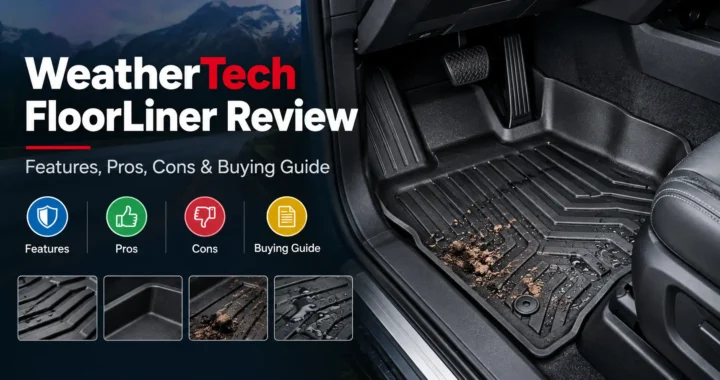


[…] original WeatherTech FloorLiner is the product that built the brand. It is manufactured from a high-density thermoplastic material […]
[…] For readers trying to gauge whether the investment pays off over time, here is a general expectation curve based on aggregated owner feedback referenced throughout this WeatherTech FloorLiner review: […]