

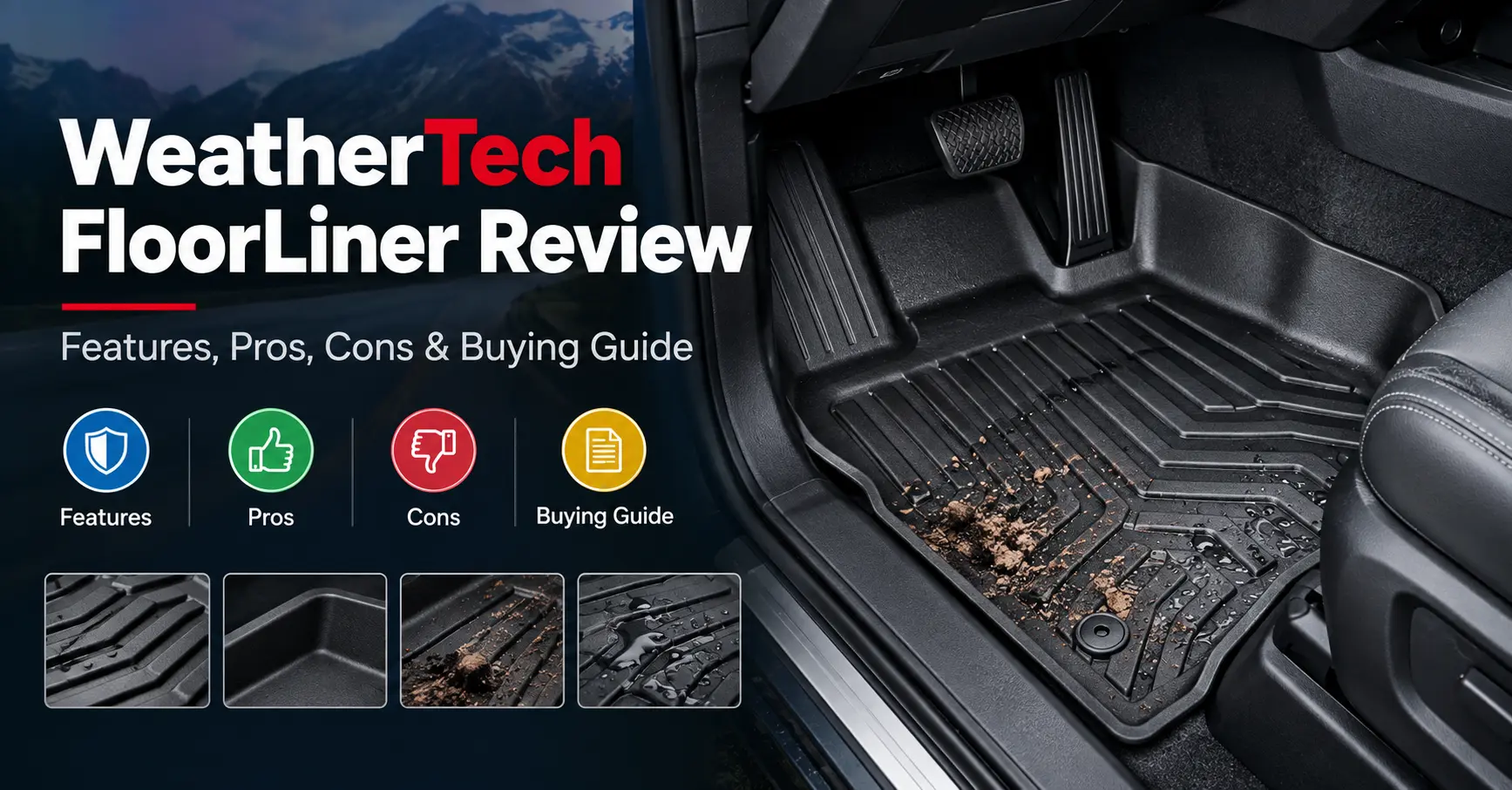
If you have ever spent a Saturday scrubbing mud, road salt, or spilled coffee out of your car’s carpet, you already understand why floor protection matters. Among the dozens of options on the market, one name comes up again and again: WeatherTech. This WeatherTech FloorLiner review takes a close look at what the product actually does, how it performs in real-world conditions, where it falls short, and whether it is worth the investment for your vehicle.
Over the next several sections, we will break down the materials, design technology, installation process, pricing, and long-term durability of WeatherTech FloorLiners. We will also compare them to competing brands and answer the most common questions buyers have before making a purchase. By the end of this WeatherTech FloorLiner review, you should have a clear picture of whether these liners deserve a spot in your vehicle.
What Is a WeatherTech FloorLiner?
A WeatherTech FloorLiner is a rigid, custom-molded floor protector designed to cover the entire footwell of a vehicle, including the front, back, and sides of the carpeted area. Unlike traditional floor mats that simply sit on top of carpet, a FloorLiner is engineered using digital measurements of a specific vehicle’s interior, so it wraps around contours, pedals, and floor humps rather than just covering a flat rectangle.
The company behind the product, MacNeil Automotive, uses laser scanning technology to map the interior of each supported vehicle model. This is a key differentiator when people search for a WeatherTech FloorLiner review, because the fit is not universal — it is built for the specific make, model, and often trim level of the car.
The liners are made from a patented High-Density Tri-Extruded (HDTE) material. This construction gives the liner a rigid core for structural strength while maintaining a surface texture that grips the factory carpet underneath, preventing the liner from sliding around during hard braking or acceleration. The advanced surfacing creates channels that carry fluids and debris to a lower reservoir, with further channeling helping to minimize fluid movement while driving, and once fluids are trapped away from shoes and clothing, they can be easily removed over the door sill.
For rear seating areas, the design incorporates many of the same features as the front liner and, where offered, is manufactured from a proprietary custom-blended TPO material that resists wear while remaining flexible in extreme temperatures.
Key Features of WeatherTech FloorLiners
Before diving deeper into this WeatherTech FloorLiner review, it helps to understand the specific features that set the product apart from generic rubber mats or carpeted inserts.
1. Laser-Measured Custom Fit
The WeatherTech FloorLiner lines the interior carpet up the front, back, and even up the sides of a vehicle’s footwell, with digital laser measurements of interior surfaces used to create a consistently precise fit. This means the liner is designed around the exact shape of a particular vehicle’s floor pan rather than a generic template that loosely fits several models.
2. High-Density Tri-Extruded Material
The HDTE material used in the front liners is designed to stay rigid enough to hold its shape and resist cracking, while still offering enough surface texture for shoes to grip. This combination of rigidity and traction is one of the most frequently praised aspects in almost every WeatherTech FloorLiner review found online.
3. Raised Edges and Containment Channels
One forum contributor testing the product in harsh New England winters noted that the liners can hold over two liters of liquid thanks to a raised lip that traps water, coffee, milk, and other spills, keeping them from spreading across the vehicle’s interior. This raised-lip design is particularly valuable for anyone dealing with snow, mud, or frequent spills.
4. Textured, Anti-Slip Surface
The textured finish of the FloorLiner provides a tactile feel intended to ensure traction under extreme weather conditions, which matters for anyone getting in and out of the vehicle in rain, snow, or ice.
5. Rear Liner Flexibility
For the rear seating area, the liners are constructed to remain pliable across a wide temperature range. Rear FloorLiners are manufactured from a proprietary custom-blended TPO (thermoplastic olefin) material that is wear resistant but remains flexible under temperature extremes, which is important for vehicles that experience both scorching summers and freezing winters.
6. Easy Installation
Most owners report a straightforward installation process. WeatherTech rates installation difficulty at the easiest level on its own scale, and many liners use existing factory anchor points. One detailed hands-on account described how the front mats hook onto existing mat holders on the driver’s side, while the passenger side liner stays in place using a spiked plastic button attached to the mat, with no spikes needed for the second or third row or the cargo liner.
7. Made in the USA with a Manufacturer Warranty
WeatherTech automotive products are manufactured in the United States and are backed by a three-year warranty against faulty materials and workmanship. Warranty coverage is a meaningful factor for buyers comparing WeatherTech against cheaper alternatives, since it signals the company’s confidence in long-term durability.
WeatherTech FloorLiner Pros and Cons
Every honest WeatherTech FloorLiner review needs to address both sides of the coin. Here is a breakdown of the advantages and drawbacks based on owner experiences, product documentation, and independent testing.
Pros
- Exceptional Fit and Coverage Because each liner is laser-measured for a specific vehicle, the fit is dramatically more precise than universal floor mats. Liners wrap up the sides of the footwell and around pedals, which reduces gaps where dirt and moisture can seep through to the factory carpet.
- Outstanding Durability Under Heavy Use Owners frequently mention hauling heavy or abrasive cargo without damaging the liners. One reviewer who used the mats in a truck bed area explained that items like cinder blocks and firewood, which would normally work their way into carpet fibers and become difficult to vacuum, were no match for the liners, and debris simply brushed off leaving the mats looking new.
- Effective Liquid and Debris Containment The raised-lip design and internal channeling system genuinely help contain spills, melted snow, and mud rather than letting them spread across the cabin floor.
- Long-Term Value for Frequent Drivers Owners who deal with harsh climates report strong long-term satisfaction. One longtime customer explained that liners in a prior vehicle lasted more than ten years and still looked great aside from some staining. This kind of longevity, when achieved, offsets the higher upfront price compared to cheaper universal mats.
- Simple Maintenance Cleaning generally requires nothing more than removing the liner, knocking off loose debris, and hosing it down or wiping it with a damp cloth. There is no need for carpet shampoo or specialized cleaning products.
- Backed by a Manufacturer Warranty The three-year warranty against material and workmanship defects gives buyers a safety net that many competing brands do not offer.
Cons
- Higher Price Point WeatherTech FloorLiners typically cost more than universal rubber mats or basic carpeted inserts. For budget-conscious shoppers, the price difference can be a genuine barrier, especially for larger vehicles requiring a full set covering front, rear, and cargo areas.
- Reported Quality Inconsistency on Some Newer Models Not every experience has been positive. One buyer comparing an older set to a newer purchase for a different vehicle noted that the newer liners felt flimsier than older models, and after about a year began showing wear near the accelerator pedal, despite being used with regular gym or dress shoes rather than heavy work boots, leading to disappointment compared to a competing brand that had held up better in the past. While this is not universal, it is a data point worth considering, particularly for buyers relying on liners for years of heavy daily use.
- Rigid Material Can Feel Less Comfortable Because the HDTE material is intentionally rigid for durability, some drivers find the surface less cushioned underfoot compared to soft carpeted mats, particularly during long drives.
- Limited Aesthetic Appeal for Some Vehicles Not everyone loves the utilitarian look of a plastic liner in a nicer vehicle. As one enthusiast reviewing the product for a sports car put it, some might not consider a FloorLiner the most attractive footwell protection for a high-end car, even though it makes practical sense. Buyers prioritizing cabin aesthetics over function may want to weigh this trade-off.
- Vehicle-Specific Fitment Means No Universal Option Since each liner is built for a specific make and model, buyers with older, rarer, or heavily modified vehicles may find that a proper fitment simply is not available.
How Does WeatherTech Compare to Other Floor Liner Brands?
No WeatherTech FloorLiner review is complete without at least a brief comparison to competitors, since price and material quality vary significantly across brands.
- WeatherTech vs. Husky Liners: Husky Liners is often cited as WeatherTech’s closest competitor in terms of build quality and containment design. Some owners who have used both brands report that Husky Liners held up better in specific circumstances, as reflected in feedback from a buyer who said liners purchased in the past from a competing brand held up better than a newer WeatherTech purchase. However, this single data point does not represent the broader market, where WeatherTech is generally regarded as a premium option.
- WeatherTech vs. Generic Universal Mats: Universal rubber mats are significantly cheaper but sacrifice the custom fit, containment channels, and raised-lip design that make WeatherTech liners effective in messy conditions. For buyers who only need occasional protection, a universal mat might suffice. For daily protection against snow, mud, pets, or kids, the custom fit of a FloorLiner tends to outperform generic options by a wide margin.
- WeatherTech vs. OEM Carpeted Mats: Factory carpeted mats offer a more premium look but provide little to no liquid containment and are far more difficult to clean once stained. WeatherTech liners trade some aesthetic softness for dramatically better protection.
Installation Process: What to Expect
Installing WeatherTech FloorLiners is designed to be a simple, tool-free process for most vehicles. Based on hands-on installation accounts, the general steps are:
- Remove existing floor mats and vacuum the factory carpet thoroughly before installation.
- Allow the liners to acclimate to room or garage temperature, especially in colder climates, since the material can be stiff when cold. One installer working in a warm garage noted that letting the liners rest in a flat position during a warm afternoon allowed them to properly settle before installation.
- Align the front liners with the factory floor contours and pedal area, then secure them using the appropriate anchor system. On many vehicles, the driver’s side liner hooks onto existing mat holders, while the passenger side is secured using a spiked plastic button attached to the mat itself.
- Place the rear liners, which typically do not require anchor points and simply rest in the footwell area, with no spikes needed for the second or third row or the cargo liner.
- Check for full contact with the floor contours, ensuring the liner sits flush without curling at the edges.
Most buyers report completing installation in under 15–20 minutes without needing any tools, which is a notable advantage over some competing brands that require trimming or additional hardware.
Maintenance and Cleaning Tips
One of the most practical advantages highlighted throughout this WeatherTech FloorLiner review is how easy the product is to maintain. Recommended cleaning steps include:
- Remove the liner from the vehicle rather than cleaning it in place, to avoid pushing debris further into the cabin.
- Shake or knock off loose debris such as dried mud, gravel, or leaves.
- Rinse with a garden hose for heavier buildup, particularly after winter driving involving road salt.
- Wipe with a mild soap and water solution for stains, avoiding harsh solvents that could degrade the surface texture over time.
- Dry thoroughly before reinstalling to prevent trapped moisture from transferring back onto the vehicle’s carpet.
Because the liner materials are non-porous, stains and spills rarely penetrate the surface the way they would with fabric mats, making routine maintenance quick and effective.
Pricing and Value Considerations
WeatherTech FloorLiners are positioned as a premium product, and pricing reflects that positioning. Costs vary depending on vehicle make and model, how many rows are covered, and whether a cargo liner is included in the set. Buyers should expect to pay noticeably more than they would for basic universal mats, but many find the trade-off worthwhile given the multi-year lifespan reported by long-term owners.
When evaluating whether the price is justified, consider:
- How often the vehicle is exposed to mud, snow, or spills: Heavy use justifies the higher upfront cost.
- How long you plan to keep the vehicle: Owners keeping a vehicle for many years tend to see the best return on investment.
- Resale value considerations: A vehicle with well-maintained, protected carpet often commands a better resale or trade-in price.
- Climate: Buyers in regions with heavy snow, salt, or rain tend to benefit the most from the containment design.
Who Should Buy WeatherTech FloorLiners?
Based on the features and owner feedback covered in this WeatherTech FloorLiner review, the product is best suited for:
- Drivers in snowy or rainy climates who need reliable containment for melted snow, slush, and mud.
- Parents with young children who frequently deal with spilled drinks, food, and general mess.
- Pet owners who need protection against shedding, mud, and accidents.
- Outdoor enthusiasts who load gear such as camping equipment, hiking boots, or sports equipment into their vehicles regularly.
- Long-term vehicle owners who want to preserve resale value and interior condition over many years.
They may be less essential for buyers who primarily drive in dry climates, rarely transport messy cargo, or prioritize a soft, carpeted look over functional protection.
Materials Deep Dive: Why HDTE and TPO Matter
To really understand why this WeatherTech FloorLiner review keeps returning to the material construction, it helps to unpack what HDTE and TPO actually mean in practical terms.
High-Density Tri-Extruded (HDTE) Material. This is a three-layer extrusion process that fuses different plastic densities into a single panel. The bottom layer is engineered to grip the vehicle’s factory carpet so the liner doesn’t shift under braking or cornering. The middle layer provides the rigid backbone that lets the liner hold its molded shape instead of collapsing flat like a rubber mat. The top layer is textured for traction and finished in a way that resists cracking from UV exposure and temperature swings. Front liners typically use this HDTE construction because the front footwell endures the most direct foot traffic, pedal contact, and debris.
Thermoplastic Olefin (TPO). Rear liners and, on some vehicles, cargo liners use a custom-blended TPO material instead. TPO is prized in the automotive industry for staying flexible even when temperatures swing from summer heat to winter cold, which matters for the rear footwell and trunk area where a rigid liner might otherwise crack after years of expansion and contraction. TPO is also lighter and easier to mold into complex three-dimensional shapes, which is useful for rear liners that often need to wrap around drivetrain humps, seat tracks, and floor vents.
Both materials are chosen specifically because they resist common failure modes seen in cheaper mats: warping in heat, cracking in cold, and losing shape after repeated flexing. This dual-material approach is one reason WeatherTech liners tend to outlast simple one-piece rubber mats sold as universal fits.
The Fitment Technology Behind the Scenes
A recurring theme across nearly every WeatherTech FloorLiner review is the emphasis on precision fitment, and it’s worth explaining how that process actually works. Rather than relying on a single “one-size” mold for a model line, the manufacturer uses laser scanning equipment to capture a three-dimensional map of a vehicle’s interior floor pan, including the depth of footwells, the location of factory anchor points, the shape of center console overhangs, and the contour of door sills.
This scan becomes the basis for a custom injection mold specific to that vehicle’s floor geometry. Because different trim levels sometimes have different floor configurations (four-wheel drive humps, manual versus automatic transmission tunnels, or optional third-row seating), the company frequently produces multiple liner variants for what looks like a single model on paper. This is why, when shopping for liners, it’s important to confirm not just the year, make, and model, but also drivetrain and seating configuration to ensure a proper match.
The payoff for this level of detail is a liner that sits nearly flush with the factory floor, minimizing gaps at the edges where dirt, gravel, or liquid could otherwise slip underneath and reach the original carpet. Universal mats, by contrast, are designed to approximate a wide range of vehicle shapes, which inevitably leaves gaps in coverage.
Real-World Performance in Different Climates
Because this WeatherTech FloorLiner review is meant to help buyers across a wide range of driving conditions, it’s worth looking specifically at how the product performs in different environments.
- Cold and Snowy Climates: This is arguably where FloorLiners shine the most. Owners in regions that see heavy snowfall and road salt report that the raised lip design keeps meltwater and slush contained near the driver’s feet rather than letting it run toward the center console or under the seats. The textured surface also helps prevent wet or snow-covered boots from sliding while operating the pedals, which is a meaningful safety consideration and not just a convenience feature.
- Hot and Humid Climates: In warmer regions, the primary concerns are UV degradation and material softening. The HDTE and TPO materials are formulated to resist significant softening or brittleness across a wide temperature range, though owners in extremely sun-exposed environments (such as vehicles parked outdoors year-round in desert climates) should still expect some gradual fading over many years, which is typical of nearly all plastic and rubber automotive products.
- Rainy and Humid Coastal Climates: For drivers dealing with frequent rain rather than snow, the liners perform similarly well at containing water tracked in from wet shoes or umbrellas. The main advantage here is how quickly the liners dry compared to carpeted mats, since water simply pools in the channeling system rather than soaking into fibers.
- Dry, Dusty, or Rural Climates: In drier climates where dust, sand, and light debris are more common than liquid spills, the raised edges and textured surface still make cleanup easier than with carpet, though the containment benefit is somewhat less dramatic than in wet climates. Buyers in these regions may weigh the cost-benefit differently, since the primary advantage shifts from liquid containment to durability and ease of cleaning.
Common Mistakes Buyers Make When Shopping for FloorLiners
Since this WeatherTech FloorLiner review is also meant to serve as a buying guide, it’s worth flagging a few mistakes that lead to buyer dissatisfaction:
- Ordering the Wrong Configuration: Many vehicles have multiple floor configurations depending on drivetrain, transmission type, or optional equipment like a third row or a floor-mounted subwoofer box. Ordering based on model year alone, without checking these details, is one of the most common causes of an improper fit.
- Skipping the Acclimation Step: Installing liners immediately after they arrive in cold weather, without letting them warm up first, can make them feel stiffer and harder to seat properly. Taking the time to let the material reach room temperature before installation results in a better fit and reduces the risk of the liner curling at the edges.
- Choosing Liners Based on Price Alone: Because WeatherTech liners sit at a premium price point, some buyers are tempted by significantly cheaper universal alternatives without accounting for the fact that a poor fit undermines most of the containment benefits that make a floor liner worthwhile in the first place.
- Neglecting Regular Cleaning: While the liners are far easier to maintain than carpet, letting debris, sand, or gravel accumulate for long periods can accelerate wear at contact points like the accelerator pedal area, which several owners have identified as one of the first spots to show wear on heavily used liners.
- Assuming All FloorLiner Products Are Identical: WeatherTech offers different product lines and generations, and materials or tolerances can vary between older and newer production runs. Reading recent, model-specific feedback rather than relying solely on general brand reputation can help set realistic expectations.
Environmental and Practical Considerations
Beyond pure performance, some buyers also consider the broader practicality of investing in a semi-permanent interior accessory. Because WeatherTech FloorLiners are designed to last many years rather than being replaced annually like inexpensive carpeted mats, they can reduce the overall number of floor mats discarded over the life of a vehicle. For buyers focused on long-term value rather than short-term savings, this durability factor is often cited as a meaningful part of the purchasing decision, alongside the practical benefits of interior protection and easier resale preparation.
Frequently Asked Questions
Are WeatherTech FloorLiners worth the price?
For most drivers dealing with regular exposure to dirt, moisture, or spills, the combination of custom fit, durability, and containment design makes the higher price worthwhile over the product’s multi-year lifespan.
Do WeatherTech FloorLiners fit every vehicle?
No. Because each liner is laser-measured for specific makes and models, fitment availability depends on whether your exact vehicle is supported. Older, rare, or heavily modified vehicles may not have a matching product.
How long do WeatherTech FloorLiners typically last?
Many owners report a decade or more of use with proper care, though experiences vary, and some buyers have reported faster wear on certain newer production runs.
Can WeatherTech FloorLiners be used in extreme cold?
Yes, the materials are designed to remain flexible under temperature extremes, though liners may be stiffer when very cold and benefit from acclimating to room temperature before installation.
How do I clean a WeatherTech FloorLiner?
Remove it from the vehicle, knock off loose debris, rinse with water, and wipe with mild soap as needed. Avoid harsh chemical solvents.
Is installation difficult? No, most vehicles use a tool-free installation process that takes well under half an hour, often relying on existing factory anchor points.
Comparing FloorLiners Across Vehicle Types
Not every vehicle uses floor protection the same way, and this WeatherTech FloorLiner review would be incomplete without addressing how the product performs across different vehicle categories.
- Sedans and Compact Cars: For everyday commuter vehicles, the main draw tends to be simplicity: a two- or three-piece set (front and rear) that keeps carpet clean from daily foot traffic, wet umbrellas, and the occasional coffee spill. Fitment tends to be straightforward since sedan floor pans have fewer configuration variants.
- SUVs and Crossovers: These vehicles often benefit from a full set including a cargo liner, since SUV owners are more likely to haul groceries, sports equipment, or pets in the rear cargo area. The combination of front, rear, and cargo liners provides comprehensive protection from front seat to tailgate.
- Pickup Trucks: Truck owners frequently deal with the heaviest debris loads, from work boots and tools to landscaping materials and firewood. As highlighted earlier by an owner who tested the liners against cinder blocks and firewood in a Tahoe, this is a category where the rigid HDTE construction proves particularly valuable, since it holds up to abrasive and heavy cargo far better than carpet or thin rubber mats.
- Minivans: With multiple rows of seating and higher likelihood of child-related messes, minivans benefit from full multi-row liner sets. The raised-lip containment design is especially useful here, given how often spilled drinks and snacks are a reality of family transportation.
- Performance and Luxury Vehicles: As mentioned earlier regarding enthusiast use in a Corvette, some owners of higher-end vehicles hesitate due to aesthetic concerns, trading a factory carpeted look for functional protection. For vehicles used in track conditions, inclement weather, or frequent gear transport, this trade-off is often considered worthwhile despite the less premium appearance.
Long-Term Ownership: What to Expect Year by Year
For readers trying to gauge whether the investment pays off over time, here is a general expectation curve based on aggregated owner feedback referenced throughout this WeatherTech FloorLiner review:
- Year 1: Liners typically look and perform like new, with owners reporting high satisfaction with fit, containment, and ease of cleaning during the first year of ownership.
- Years 2–3: Most owners continue to report strong performance, though light surface scuffing or minor fading may begin to appear on liners exposed to constant sun or heavy use. This is also the period where the manufacturer’s three-year warranty remains active, offering protection against manufacturing defects.
- Years 4–7: Well-maintained liners in moderate climates often continue performing reliably, while liners in extreme climates or subjected to abrasive daily use (such as commercial or work-truck applications) may begin showing wear at high-contact points like the accelerator pedal area.
- Years 8 and Beyond: Owner reports vary widely at this stage. Some drivers report liners lasting more than a decade with only cosmetic staining, while others — particularly those who purchased more recent production runs — have reported earlier wear than expected. This variability is worth factoring into long-term expectations rather than assuming uniform lifespan across all purchases.
Final Verdict
This WeatherTech FloorLiner review confirms what many drivers have found through years of real-world use: the product delivers meaningfully better protection than generic floor mats thanks to its laser-measured custom fit, raised containment edges, and rigid yet grippy material construction. The three-year warranty and made-in-the-USA manufacturing add further confidence for buyers considering the investment.
That said, the higher price point, occasional reports of inconsistent quality on certain newer production runs, and a utilitarian appearance are worth weighing before purchase. For drivers in harsh climates, families with kids or pets, and anyone who regularly hauls messy cargo, WeatherTech FloorLiners are likely to be a smart long-term investment. For buyers with lighter usage needs or tighter budgets, a more basic universal mat may be sufficient.
Ultimately, whether WeatherTech FloorLiners are the right choice comes down to how much value you place on long-term interior protection versus upfront cost — and for the majority of drivers who deal with real-world mess, the liners tend to earn back their price many times over.
