

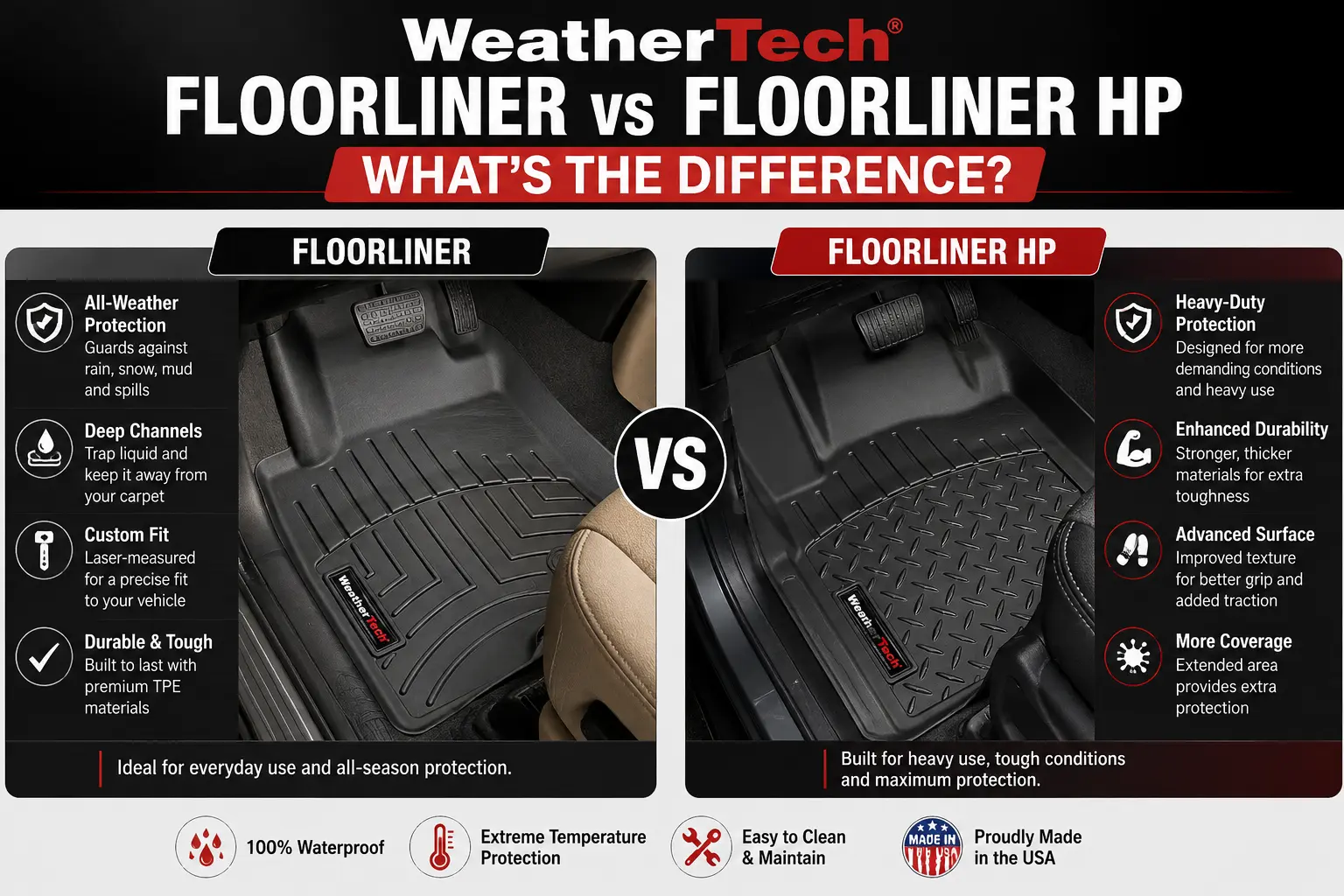
If you have spent even five minutes shopping for interior car protection, you have almost certainly come across WeatherTech. The brand has built its reputation on laser-measured, vehicle-specific floor liners that outperform generic rubber mats in almost every way. But once you land on the WeatherTech website or scroll through a dealership accessories page, you run into a choice that trips up a lot of buyers: should you get the original WeatherTech FloorLiner, or the newer WeatherTech FloorLiner HP?
At a glance, they look nearly identical. Both are custom-molded to your exact make and model. Both feature raised edges designed to trap mud, snow, spilled coffee, and muddy paw prints. And both carry the WeatherTech name and the same reputation for durability. But underneath that surface-level similarity are real differences in material composition, feel underfoot, grip, flexibility, and price that can meaningfully affect which one is the right fit for your vehicle and your lifestyle.
This guide breaks down the WeatherTech FloorLiner vs FloorLiner HP debate in detail, covering everything from the raw materials used in manufacturing to which option makes more sense for pickup trucks, SUVs, family vehicles, and daily commuters. By the end, you will know exactly which liner deserves a spot in your footwells.
A Quick Overview of WeatherTech as a Brand
Before diving into the comparison, it helps to understand why WeatherTech liners command a premium over generic floor mats in the first place. Unlike universal-fit mats that leave gaps around pedals, center consoles, and door sills, WeatherTech uses digital laser scanning technology to map the exact contours of each vehicle’s footwell. The resulting liner hugs every curve, covers the door sills, and rises up the sides of the floor pan to contain spills rather than letting them run off onto the carpet.
This approach has made WeatherTech one of the most recognized names in automotive floor protection, and it is why the brand eventually introduced a second product line, the FloorLiner HP, to address feedback from drivers who wanted more flexibility, a softer step-in feel, and additional grip on slick surfaces. Understanding that history is the first step to understanding what actually separates the two products today.
What Is the Standard WeatherTech FloorLiner?
The original WeatherTech FloorLiner is the product that built the brand. It is manufactured from a high-density thermoplastic material engineered to hold its shape under pressure. That rigidity is intentional. When you step into a vehicle with muddy boots or set down a bag of wet groceries, the last thing you want is a liner that buckles, folds, or shifts out of place. The standard FloorLiner is built to stay exactly where it is installed, thanks to both its firm structure and its integrated retention system, which anchors the liner to existing floor hooks or mounting points in most vehicles.
Key characteristics of the standard FloorLiner include:
- A firmer, more rigid structural feel that resists deformation
- Deep channels and raised outer edges that funnel liquid and debris away from your shoes
- A textured surface designed to grip footwear and prevent sliding
- A finish that is easy to hose off, wipe down, or shake out
- Broad compatibility across sedans, SUVs, crossovers, and trucks, often with front, second-row, and third-row options depending on the vehicle
Because of its sturdier build, the standard FloorLiner has traditionally been the go-to choice for truck owners, outdoor enthusiasts, and anyone who regularly deals with heavy-duty messes like gravel, sand, tools, or work boots.
What Is the WeatherTech FloorLiner HP?
The FloorLiner HP, where “HP” stands for High Performance, is WeatherTech’s newer, more refined take on the same core concept. Instead of the firmer thermoplastic used in the original, the HP version is molded from a softer, more pliable rubber-like compound. This material choice changes the entire feel of the product. Where the standard FloorLiner feels structured and almost architectural underfoot, the HP version feels closer to a premium rubber mat, with more give and a noticeably softer step-in experience.
WeatherTech also engineered the HP line with small anti-skid nibs on the underside, which improve grip against the vehicle’s carpet without necessarily requiring the same reliance on mechanical retention clips. Some drivers find this reduces the shifting and curling at the edges that can sometimes happen with flatter mats over time.
Notable features of the FloorLiner HP include:
- A softer, more flexible material with a premium, rubberized feel
- Anti-skid nibs on the underside for enhanced grip against carpet
- The same laser-measured, vehicle-specific fit as the standard FloorLiner
- Raised front, back, and side walls for full-perimeter containment
- A more contemporary, upscale appearance that many owners feel suits luxury and near-luxury interiors
The FloorLiner HP was designed for drivers who wanted the same total protection as the original but with a more comfortable, less rigid feel, plus a bit more visual polish to complement upscale cabins.
WeatherTech FloorLiner vs FloorLiner HP: Material Breakdown
The single biggest difference between these two products comes down to material science, and it is worth spending extra time here because it explains almost every other difference on this list.
The standard FloorLiner uses a high-density thermoplastic elastomer engineered for stiffness and shape retention. Think of it as similar in spirit to a hard plastic storage bin: durable, resistant to denting, and unlikely to warp even under sustained weight or temperature swings. This rigidity is what allows the standard FloorLiner to snap into a vehicle’s floor hooks and stay locked in place through hard cornering, sudden stops, or repeated foot traffic.
The FloorLiner HP, by contrast, uses a softer, more elastic rubber-like polymer. This material behaves more like a high-quality rubber floor mat you might find in a boot room or garage: pliable, quiet underfoot, and less prone to the hollow “clack” sound that firmer plastics sometimes produce when items are dropped on them. Many versions of the HP compound are also latex-free and formulated to be more recyclable, which appeals to environmentally conscious buyers.
Neither material is objectively “better” in a vacuum. The choice comes down to whether you value structural rigidity (standard FloorLiner) or a softer, more comfortable, quieter ride underfoot (FloorLiner HP).
Fit, Coverage, and Design
Both products are laser-measured to the exact specifications of your vehicle’s make, model, and often trim level, which is one of the core reasons WeatherTech has such a loyal following. Neither liner is a “one-size-fits-most” universal mat, and both are designed to cover the floor pan corner to corner, tuck around pedals and center console bases, and rise up the sides of the footwell to keep spills contained rather than letting them spread to the carpet.
Where they diverge slightly is in how that coverage feels and behaves in daily use. The standard FloorLiner’s rigid sidewalls tend to hold a very consistent shape, which some drivers find gives a slightly deeper, tub-like containment area, especially useful for winter boots dripping with snowmelt or muddy work gear. The FloorLiner HP’s raised edges are still substantial, but the more flexible material can compress slightly under heavier loads, which is usually a non-issue for typical use but worth noting if you regularly haul unusually heavy or bulky items in the front footwell.
Both liners are typically available in multiple color options (commonly black, tan, and grey) and can usually be purchased for the front row alone, a front-and-rear combo, or as part of a full interior protection package that includes cargo or trunk liners.
Comfort and Underfoot Feel
This is one of the most commonly cited differences among real-world owners. The standard FloorLiner’s firmness, while excellent for durability, can feel harder underfoot, especially for a driver who spends long hours behind the wheel or has passengers resting their feet in the back seat for extended road trips.
The FloorLiner HP was specifically designed to soften that experience. Its more pliable material compresses slightly under the foot, offering a cushioned feel that many drivers compare favorably to a quality rubber mat rather than a hard plastic tray. If underfoot comfort is a priority, particularly for daily commuters or families with young kids who spend a lot of time in the car, the HP version tends to win this category.
Grip and Slip Resistance
Both products are designed with texture patterns intended to keep footwear from sliding, but the FloorLiner HP takes this a step further with its anti-skid nibs on the underside. These small raised points are designed to bite into the vehicle’s factory carpet, helping keep the liner itself anchored in place even without relying solely on retention clips.
On top of the liner, the HP’s softer rubber-like surface can also provide better traction for shoes, particularly wet or muddy footwear, compared to the smoother, harder surface of the standard model. If you frequently get in and out of the vehicle in wet weather, this added grip, both from shoe to liner and liner to carpet, can make a noticeable difference in day-to-day usability.
Durability and Long-Term Wear
Both the FloorLiner and FloorLiner HP are built to last years, not seasons, and both come backed by WeatherTech’s limited warranty. That said, their long-term wear characteristics differ slightly because of the same material distinction discussed earlier.
The standard FloorLiner’s rigid thermoplastic is highly resistant to permanent deformation. Even after years of heavy use, it tends to hold its original shape, resist cracking, and shrug off exposure to temperature extremes, road salt, and UV light from sun exposure. This is part of why it remains a favorite among truck owners and drivers in regions with harsh winters.
The FloorLiner HP’s softer compound is still engineered for serious durability, but the more flexible material can, over very long periods of heavy use, show wear patterns like light surface scuffing in high-traffic zones, such as directly under the driver’s heel, sooner than the firmer standard version. For most drivers this is a minor cosmetic consideration rather than a functional one, but it is worth mentioning for full transparency.
Price Comparison
Price is often the deciding factor once buyers understand the feature differences. In most markets, the FloorLiner HP carries a modest price premium over the standard FloorLiner, frequently in the range of an additional 10 to 20 percent, though exact pricing varies by vehicle, retailer, and region. Owners frequently report a difference of roughly fifteen dollars between the two options for the same vehicle application, though this can shift depending on current promotions and specific fitment.
Given how close the pricing typically is, most buyers end up choosing based on feel and intended use rather than cost alone. Still, if budget is the primary concern and you do not have a strong preference for the softer HP material, the standard FloorLiner remains an excellent value.
Which Vehicles Suit Each Option Best
While either liner will technically fit any vehicle WeatherTech supports, certain use cases tend to favor one option over the other.
Best suited for the standard FloorLiner:
- Pickup trucks that regularly haul tools, work gear, or outdoor equipment
- Off-road SUVs exposed to mud, sand, and rugged terrain
- Households where maximum rigidity and shape retention matter more than underfoot softness
- Drivers in climates with heavy snow, slush, and road salt
Best suited for the FloorLiner HP:
- Luxury and near-luxury sedans and SUVs where a refined, premium cabin feel matters
- Daily commuters who prioritize comfort during long drives
- Families with children who spend significant time in the back seat
- Drivers who want extra grip and a quieter, more cushioned step-in feel
Neither vehicle type is strictly excluded from either liner, but these general patterns reflect how most owners end up choosing between the two.
Installation and Maintenance
Both products install the same way: they drop directly into the footwell and, where applicable, connect to the vehicle’s existing floor anchor points or WeatherTech’s own retention hardware. No tools, drilling, or permanent modification is required for either version, and both can be removed just as easily for cleaning.
Maintenance is similarly straightforward across both lines. A quick shake-out removes loose debris, while a hose-down or wipe with mild soap and water handles more stubborn grime like dried mud or salt residue. Neither material absorbs liquid, so spills sit on the surface rather than soaking in, and both are resistant to cracking or fading from routine sun exposure. The HP’s slightly softer surface can sometimes trap fine debris like sand in its texture more readily than the smoother standard model, so an occasional more thorough cleaning may be beneficial for HP owners in dusty or sandy environments.
Pros and Cons at a Glance
Standard WeatherTech FloorLiner
Pros:
- Rigid structure resists deformation over years of use
- Excellent for heavy-duty use, work vehicles, and off-road conditions
- Typically the lower-priced option
- Long track record of proven durability
Cons:
- Firmer, less cushioned feel underfoot
- Slightly less premium appearance for upscale interiors
- Can feel harder in colder temperatures
WeatherTech FloorLiner HP
Pros:
- Softer, more comfortable feel underfoot
- Anti-skid nibs improve grip against vehicle carpet
- More premium, contemporary appearance
- Often latex-free and more recyclable material
Cons:
- Slightly higher price in most cases
- Marginally less rigid under very heavy loads
- May show surface wear sooner in extremely high-traffic zones
Frequently Asked Questions
Is FloorLiner HP better than the standard FloorLiner?
Neither is universally “better.” The standard FloorLiner is more rigid and better suited to heavy-duty use, while the FloorLiner HP offers a softer, more premium feel underfoot. The right choice depends on your vehicle type and priorities.
Does FloorLiner HP fit the same as the standard FloorLiner?
Yes. Both are laser-measured for a vehicle-specific fit and cover the same general footwell area, including raised edges around the front, back, and sides.
Which option is better for trucks and off-road vehicles?
The standard FloorLiner’s rigid material generally holds up better against heavy tools, mud, gravel, and repeated hard use, making it a common choice for truck owners.
Which option is more comfortable for daily driving?
The FloorLiner HP’s softer material typically feels more comfortable underfoot, which is why it is popular among daily commuters and luxury vehicle owners.
Is the FloorLiner HP more expensive?
In most cases, yes, though the difference is usually modest, often in the neighborhood of ten to twenty percent more than the standard version depending on the vehicle.
Can I mix and match, using standard FloorLiner in front and HP in the back?
WeatherTech’s catalog structure varies by vehicle, but many owners do choose different combinations for front and rear rows based on their specific needs. Checking compatibility for your exact vehicle application is recommended before purchasing.
Are both options equally durable?
Both are built for long-term use and backed by WeatherTech’s warranty. The standard FloorLiner tends to resist deformation slightly better over very long periods, while the FloorLiner HP holds up well under normal daily use with a softer overall feel.
Final Verdict: Which Should You Choose?
If you had to boil the entire WeatherTech FloorLiner vs FloorLiner HP decision down to one sentence, it would be this: choose the standard FloorLiner if rigidity, heavy-duty durability, and value matter most to you, and choose the FloorLiner HP if comfort, grip, and a premium underfoot feel are your top priorities.
Both products deliver the laser-measured precision, full-perimeter spill containment, and long-term durability that have made WeatherTech a leader in automotive floor protection. Neither is a downgrade from the other; they are simply engineered for slightly different priorities. Truck owners, outdoor adventurers, and drivers facing harsh winters will likely lean toward the original FloorLiner’s rugged, structured design. Commuters, families, and luxury vehicle owners who want a softer, quieter, and more refined ride will likely prefer the FloorLiner HP.
Whichever version you choose, you are investing in one of the most protective, precisely fitted floor liner systems on the market, and either option will keep your vehicle’s carpet looking newer for far longer than a generic mat ever could.
