


Ultrasound Tech: A Complete Guide to Career, Tools, and Future Scope
Mending medical matters would be considered incomplete without ultrasound aid. Given that it allows an imaging of internal organs, pregnancies, or forms of diseases, the use of ultrasound technology may also go hand in hand with guiding medical procedures with no radiation element involved. This blog follows the occupation of the ultrasound tech or sonographer, the instruments they use, how to become one, and what the future holds.
What Is an Ultrasound Tech?
An ultrasound technician — a.k.a. a diagnostic medical sonographer — is a medical professional trained to generate images of the inside of the human body using an ultrasound machine. In this way, these pictures serve as a diagnostic and treatment tool for doctors.
They are assistants in hospitals, diagnostic laboratories, outpatient centers, clinics, etc. Technical skills, a keen eye for detail, and the ability to care for the patient are some of the skills required from an ultrasound technician.
How Does Ultrasound Technology Work?
This technique uses sound waves of very high frequency. Basically, these waves pass through the body and bounce off when they hit a tissue or an organ. Then, the ultrasound machine records the echo and creates an image on the screen in real time.
Types of Ultrasound Imaging:
- 2D Imaging: Basic grayscale images.
- Doppler Ultrasound: Measures blood flow.
- 3D Ultrasound: Shows depth and volume.
- 4D Ultrasound: Displays images in real-time, showing motions.
- Elastography: Tests tissue rigidity.
- POCUS (Point-of-Care Ultrasound): Used at the patient’s bedside.
Tools Used by Ultrasound Techs
Ultrasound tech rely on advanced tools. Each component plays a role in capturing accurate images.
Key Tools:
- Transducer/Sensor: It sends and picks up those sound waves.
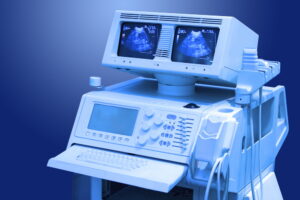
- Ultrasound console: The primary machine comprising the display and controls.
- Gel: Helps transmit sound waves efficiently.
- PAC System: Stores digital images for sharing and analysis.
Leading Machine Brands:
- GE Healthcare
- Philips Healthcare
- Siemens Healthineers
- Mindray
- Samsung Medison
- Fujifilm SonoSite
What Does an Ultrasound Tech Do?
Daily Responsibilities:
- Prepare patients for procedures.
- Apply ultrasound gel to the skin.
- Use the probe to capture images.
- Analyze image quality in real-time.
- Record findings and deliver them to physicians.
- Maintain and clean equipment.
Specialties in Ultrasound:
- OB/GYN: Working for fetal development and women’s health.
- Cardiac (Echocardiography): Capturing images of the heart.
- Abdominal: Liver, gallbladder, kidneys, and others.
- Vascular: Blood vessels and their flow.
- Musculoskeletal: Joints, ligaments, and soft tissues.
- Breast: Detecting and diagnosing lumps.
Education Path to Become an Ultrasound Tech
A medical degree is not required, but formal training is. Programs may be offered at community colleges, vocational schools, or universities.
Education Options:
- Certificate Programs: One year (for those who have previous healthcare experience).
- Associate Degree: 2 years (the most frequently taken route).
- Bachelor’s Degree: 4 years (for career advancement or for teaching).
Key Subjects You Will Study:
- Human anatomy and physiology
- Medical terminology
- Sonographic physics
- Patient care and ethics
- Hands-on lab practice
Certifications and Licensure
Certifications will always help open more doorways in the following career paths. The most respected credentialing body is the ARDMS (American Registry for Diagnostic Medical Sonography).
Popular ARDMS Credentials:
- RDMS (Registered Diagnostic Medical Sonographer)
- RDCS (Registered Diagnostic Cardiac Sonographer)
- RVT (Registered Vascular Technologist)
- RMSKS (Musculoskeletal Sonographer)
Other organizations include:
- CCI (Cardiovascular Credentialing International)
- ARRT (American Registry of Radiologic Technologists)
Licensing:
Certain U.S. states may require licensing to practice. In any case, the majority of employers require that the person be certified.
Ultrasound Tech Salary & Job Outlook
Ultrasound techs enjoy strong salaries and job growth.
Average Salary (U.S.):
- Entry Level: $60,000-$70,000/year
- Median: $82,000/year
- Top Earners: $100,000+/year
Job Outlook:
- Usually, the predicted job growth rate will be 10–17% by 2032
- Getting growth at a pace faster than the average in health careers
- Job demand will be shaped by aging populations, tech advancement, and increased use of outpatient services
Work Settings and Flexibility
Ultrasound techs can work in various environments.
Common Workplaces:
- Hospitals
- Diagnostic labs
- Physician offices
- Mobile ultrasound units
- Telehealth/remote diagnostics
Work Schedule:
- Full-time
- Part-time
- Night shifts and weekends in hospitals
Point-of-Care Ultrasound (POCUS)
POCUS is one of the defining terms in modern medicine. Physicians can scan a patient at the bedside. It speeds things up, is mobile, and fits the emergency environment.
Uses of POCUS:
- Detect internal bleeding
- Diagnose organ damage
- Guide needle procedures (e.g., biopsies)
- Monitor critically ill patients in ICUs
Emerging Technologies in Ultrasound
Artificial Intelligence (AI):
AI helps with image interpretation, workflow optimization, and scanning automation.
Robotic-Assisted Ultrasound:
Robotic arms equipped with ultrasound probes allow remote procedures or use in tight spaces.
Wireless & Portable Ultrasound:
Handheld ultrasound devices now connect to smartphones. Ideal for fieldwork, rural areas, and home visits.
Global Use of Ultrasound Tech
In developing countries, portable ultrasound units help improve maternal and child healthcare.
Global Applications:
- Prenatal care in remote villages
- Diagnosing malaria complications
- Monitoring trauma injuries
Nonprofits and NGOs distribute ultrasound units globally to increase access to care.
Tips for Students and Career Switchers
Want to enter the field? Here’s a step-by-step guide.
1. Research Programs
Find an accredited DMS (Diagnostic Medical Sonography) program.
2. Complete Prerequisites
Most programs require high school biology, math, and physics.
3. Apply and Train
Choose between a certificate, associate, or bachelor’s program.
4. Complete Clinical Hours
Hands-on experience is mandatory before certification.
5. Pass Credentialing Exams
Prepare and sit for ARDMS or ARRT exams.
Ethical and Safety Considerations
Ultrasound is safe, but ethics matter.
Ethical Points:
- Informed consent before scans
- Respect patient privacy
- Avoid unnecessary exposure
Safety Practices:
- Regular calibration of machines
- Limiting scan time
- Staying updated with safety protocols
Future of Ultrasound Tech
The field will continue to grow due to:
- AI and machine learning tools
- Real-time diagnostic platforms
- Personalized medicine applications
- Tele-ultrasound and remote diagnostics
- Advanced education platforms with VR simulations
Resources and Associations
Top Associations:
- ARDMS.org
- SDMS.org
- AIUM.org
- ASEcho.org
- HealthJob.org
Final Thoughts
This is a very gratifying career in present-day healthcare. It pays well, offers job stability, and provides a good sense of satisfaction in helping others. Demand for this service is high, and the field is constantly innovating at a very fast pace. Whether one is still a student or in the process of a career change, making a choice for an ultrasound tech career would be wise.
