

Non-governmental organisations (NGOs) play an important role in addressing social challenges and supporting communities that need help. From education and healthcare to women’s empowerment and livelihood development, NGOs work on the ground to create opportunities and improve lives.
However, meaningful social change requires collective effort. Individuals, families, businesses, and communities can all contribute to the work of an NGO for education and other social causes.
Whether you have financial resources, professional skills, time, or simply the willingness to spread awareness, there are several ways you can support an NGO and help create lasting impact.
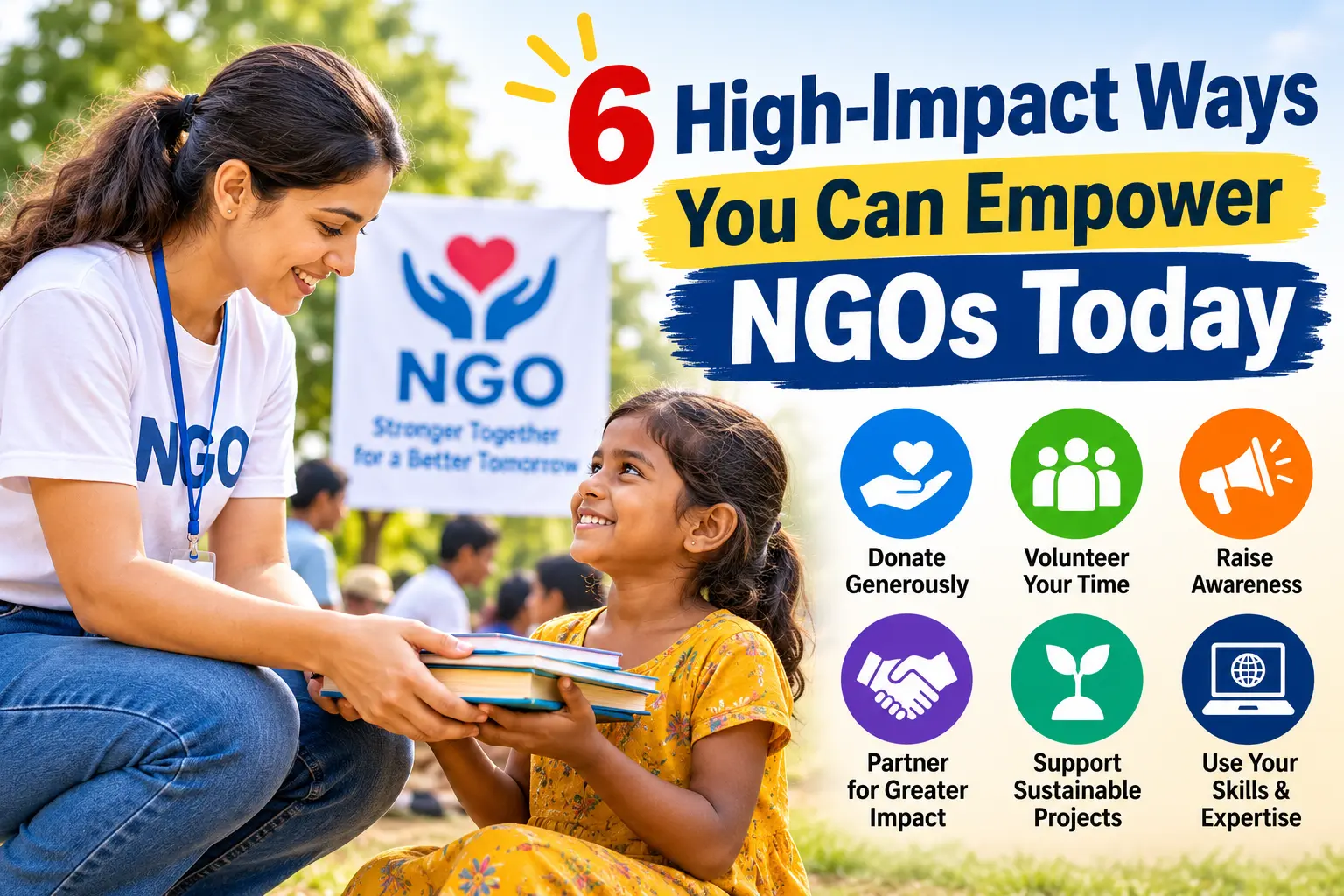
Here are six high-impact ways you can empower NGOs today.
1. Make a Donation for Education
Education can change a child’s future by creating opportunities for learning, employment, and independence. A donation for education can help provide children with resources they may otherwise struggle to access.
Your contribution can support:
- School fees and educational expenses
- Books, uniforms, and school supplies
- Digital learning resources
- Scholarships
- Transportation and other education-related needs
- Community-based learning programmes
Even a small contribution can become meaningful when many people come together to support the same cause.
When choosing an NGO for education, look for organisations that clearly explain how donations are used and provide information about their programmes and impact.
2. Sponsor a Child’s Education
Child sponsorship is another meaningful way to support education. Instead of making a one-time contribution, sponsorship can provide continued support for a child’s educational journey.
Depending on the programme, sponsorship may contribute towards school-related expenses, learning materials, mentoring, nutrition, or other needs that can help a child remain in school.
Long-term educational support can be especially valuable for children from underserved communities, where financial difficulties may increase the risk of dropping out.
3. Volunteer Your Time and Skills
Financial donations are valuable, but NGOs also need people who can contribute their time and expertise.
You can volunteer by:
- Teaching or mentoring children
- Supporting fundraising campaigns
- Helping with digital marketing
- Creating educational content
- Providing professional expertise
- Organising community activities
- Supporting events and awareness campaigns
Professionals can also use their existing skills to help NGOs improve their communication, technology, fundraising, administration, or outreach efforts.
Volunteering allows you to contribute directly while gaining a deeper understanding of the communities an NGO serves.
4. Support Girls’ Education
Supporting girls’ education can create benefits that extend beyond one individual. Education can help girls develop knowledge, confidence, skills, and greater access to future opportunities.
You can support initiatives that focus on:
- Keeping girls in school
- Providing educational materials
- Scholarships and financial assistance
- Digital education
- Life skills and career guidance
- Preventing school dropouts
- Building awareness among families and communities
If you are looking for an NGO for education, consider organisations that have dedicated programmes addressing the barriers girls face in accessing and continuing their education.
5. Use Your Voice to Create Awareness
You don’t always need to make a large financial contribution to support an NGO. Raising awareness can also help organisations reach more supporters and beneficiaries.
You can share an NGO’s campaigns on social media, talk about its work with friends and colleagues, participate in fundraising initiatives, or encourage your workplace to support relevant programmes.
For example, sharing information about a donation for education campaign can introduce the cause to someone who may be able to contribute.
One person’s contribution can help another person discover an opportunity to make a difference.
6. Encourage Corporate and Community Partnerships
Businesses can have a significant role in strengthening NGOs through structured partnerships. Companies can support education programmes through corporate social responsibility initiatives, employee volunteering, fundraising, infrastructure support, technology, or long-term programme funding.
Community groups can also organise collective initiatives such as school-supply drives, fundraising events, or educational campaigns.
Partnerships become particularly effective when NGOs and supporters work towards clearly defined goals and measure the results of their programmes.
How to Choose the Right NGO to Support
Before contributing, take some time to understand the organisation and its work. A responsible donor should consider:
- What social issue does the NGO address?
- Who are the beneficiaries?
- How are donations used?
- Does the organisation provide impact information?
- Are its programmes transparent?
- Does it have experience in the community it serves?
- Can you track the impact of your contribution?
These questions can help you choose an organisation that aligns with your values and priorities.
Conclusion
Empowering NGOs is not limited to writing a cheque. You can contribute through education donations, child sponsorship, volunteering, awareness building, professional skills, or corporate partnerships.
A donation for education can help provide a child with access to learning, while supporting an NGO for education can contribute to broader programmes designed to create sustainable opportunities for communities.
The most important step is to start. Whether you donate, volunteer, share a campaign, or encourage others to participate, your action can become part of a larger movement for positive social change.
