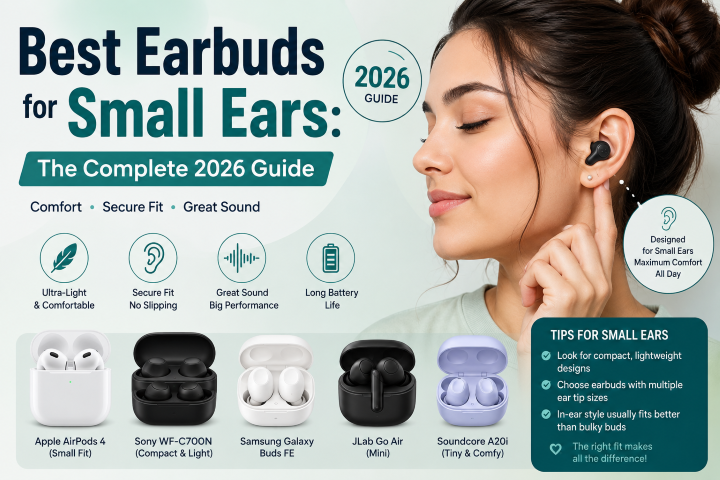
Do your earbuds keep falling out? You are not alone. Many people have small ears. Most earbuds are made for average ear sizes. This leaves small-eared listeners stuck. They deal with loose fits. They deal with sore ears. And They deal with poor sound.
This guide fixes that problem. We cover the best earbuds for small ears. We explain what to look for. And We share real buying tips. By the end, you will know exactly what to buy.
Why Small Ears Need Special Earbuds
Ears come in many shapes. Some ear canals are narrow. Some concha bowls are shallow. Standard earbuds do not account for this. They are built for a “one size fits most” ear. That size is often too big.
When earbuds are too big, problems start. The seal breaks. Sound quality drops. Bass disappears. Noise cancellation stops working well. Worse, the earbuds may simply fall out. This happens during walks. It happens during workouts. It even happens while sitting still.
Comfort suffers too. A bulky earbud presses on the outer ear. This pressure builds over time. After an hour, your ear starts to ache. After two hours, you want to rip them out. Nobody enjoys that.
This is why finding the best earbuds for small ears matters so much. The right pair changes everything. Sound improves. Comfort improves. The earbuds simply stay put.
What Makes an Earbud Good for Small Ears
Not every “small” earbud is actually small. Some brands use tiny marketing terms loosely. So what should you actually check? Here are the key factors.
1. Multiple Ear Tip Sizes
Good earbuds come with several tip sizes. Look for at least four options. Extra-small tips matter most. Foam tips often work better than silicone. Foam expands slowly. It molds to your ear canal. This creates a gentle, secure seal.
2. Lightweight Housing
Heavy earbuds pull down on your ear. This is worse for small ears. A light housing sits comfortably. It does not tug or shift. Check the weight specs before buying. Anything under 5 grams per earbud is a good sign.
3. Shallow Insertion Design
Some earbuds sit deep in the canal. Others rest closer to the outer ear. Shallow-fit designs often suit small ears better. They reduce pressure. They also reduce that “plugged up” feeling.
4. Stability Wings or Fins
Small wings can help earbuds stay in place. But they can also feel awkward on smaller ears. Test this feature carefully. Some people love the extra grip. Others find it uncomfortable.
5. Open-Ear Alternatives
If in-ear designs never work for you, consider open-ear earbuds. These sit outside the ear canal. They use bone conduction or air conduction. They do not enter the ear at all. This removes the fit problem completely. Sound quality is different, though. Bass tends to be lighter.
The Best Earbuds for Small Ears in 2026
Below is a breakdown of standout options. Each one suits small ears in a different way. Pick based on your priorities: sound, price, or comfort.
Best Overall: Compact Flagship Earbuds with Multiple Tip Sizes
Premium wireless earbuds with strong noise cancellation are a top pick for small ears this year. They typically ship with several foam tip sizes, including a smaller-than-average option. This range helps many small-eared users find a snug, comfortable seal.
Sound quality on flagship models is usually excellent. Bass feels full. Vocals sound clear. Battery life often runs close to eight hours per charge. These earbuds carry a premium price tag. But for many buyers, the comfort and sound justify the cost.
Pros:
- Multiple tip sizes, including extra-small
- Strong noise cancellation
- Rich, detailed sound
Cons:
- Higher price point
- Case is not the smallest on the market
Best Value: Budget ANC Earbuds
Not everyone wants to spend big money. Budget-friendly noise-cancelling earbuds now offer real value. Many small, ergonomic models come in well under $100. They include wireless charging in some cases. Comfort feels surprisingly good for the price.
These budget picks rarely match premium sound quality. But they solve the fit problem well. That makes them one of the best earbuds for small ears on a budget.
Pros:
- Affordable price
- Solid comfort for small ears
- Wireless charging on some models
Cons:
- Sound quality is average
- Noise cancellation is decent, not exceptional
Best for iPhone Users: Apple-Ecosystem Earbuds
If you use an iPhone, Apple’s premium earbuds are worth a look. They include extra-small tip options. Fit-testing features help you check your seal in the app. Integration with iOS is smooth. Calls sound clear. Switching between Apple devices feels instant.
Android users can still use these earbuds. But some smart features will be missing. If you are deep in the Apple ecosystem, this pick makes sense.
Pros:
- Extra-small tip size included
- Seamless Apple device integration
- Good call quality
Cons:
- Limited features on Android
- Premium pricing
Best for Android Users: Compact Android-First Earbuds
Some earbuds are built with Android users in mind. Small ear tips come standard. A tiny stabilizing wing keeps the bud in place. Many reviewers with small ears say the fit “just works” out of the box.
Swipe controls are common on these models. Volume and track changes feel intuitive. Battery life is competitive too.
Pros:
- Small, secure fit
- Useful swipe gestures
- Good Android app support
Cons:
- Slightly bulkier case
- Occasional wing discomfort for very small ears
Best Discreet Option: Ultra-Small Profile Earbuds
Some people want earbuds that barely show. Compact, low-profile earbuds fit that need well. They sit close to the ear. They do not stick out much. This design works especially well for small ears, since there is less bulk to manage.
Sound is good but not class-leading. Battery life is average. Still, for discretion and comfort, these earbuds shine.
Pros:
- Very discreet, low-profile fit
- Comfortable for small ears
- Stylish design
Cons:
- Average battery life
- Sound quality is good, not outstanding
Best for Travel: Foldable Hybrid Earbuds
Frequent flyers need earbuds that switch between over-ear and in-ear comfort. Some travel-focused models offer both. This flexibility helps if your ears get tired on long flights. Noise cancellation on these models tends to be strong, which is a bonus in loud cabins.
Pros:
- Flexible wearing styles
- Strong noise cancellation
- Great for long trips
Cons:
- Bulkier case for travel
- Higher price
Best Open-Ear Pick: Bone Conduction or Air Conduction Earbuds
If in-ear designs never feel right, try an open-ear model. These hook around the ear. They never enter the canal. This design removes fit problems for good. It works well for workouts. It works well for long work calls too.
Sound quality is lighter on bass. But comfort is unmatched for many small-eared users. Awareness of your surroundings stays high, which adds a safety benefit during runs or bike rides.
Pros:
- Zero ear canal pressure
- Great for long wear
- Safer for outdoor activity
Cons:
- Weaker bass response
- No passive noise isolation
Best Wired Option: Compact In-Ear Monitors
Not everyone wants wireless. Compact in-ear monitors (IEMs) still exist for small ears. Many boutique audio brands design smaller housings. These often sound excellent. Some even outperform wireless models on pure audio quality.
The tradeoff is convenience. You get a cable. You lose Bluetooth freedom. But sound purists with small ears often prefer this route.
Pros:
- Excellent sound quality
- Smaller housing options available
- No battery to charge
Cons:
- Wired only
- Less convenient for daily use
How to Test If Earbuds Actually Fit Your Small Ears
Reading specs only gets you so far. You need a real fit test. Here is a simple process.
Step 1: Insert the smallest tip first: Start small. You can size up later.
Step 2: Do the jaw test: Open your mouth wide. Chew gently. If the earbud shifts or loosens, size down.
Step 3: Do the shake test: Shake your head side to side. Then nod up and down. The earbud should stay firmly in place.
Step 4: Check for pressure points: Wear the earbuds for 20 minutes. Note any sharp pain or pressure. Mild awareness is normal. Sharp pain is not.
Step 5: Test the seal: Play music at a normal volume. Then cover the earbud gently with a finger. If bass suddenly increases, your seal was weak before. Try a different tip.
Step 6: Try an app-based fit test: Many earbuds now include a built-in fit test in their companion app. Use this feature. It measures seal quality automatically.
Common Mistakes People with Small Ears Make
Many buyers get frustrated needlessly. Here are common mistakes to avoid.
- Buying without checking tip size options: Always confirm extra-small tips are included. Some brands only ship medium and large.
- Ignoring housing weight: A light tip does not help if the housing itself is heavy. Weight matters just as much as tip size.
- Skipping the return window: Fit is personal. Always buy from a retailer with a generous return policy. Test the earbuds for a full week before deciding.
- Assuming foam tips fix everything: Foam helps, but housing shape still matters. A great tip on a bad housing will still feel off.
- Overlooking open-ear designs: Many small-eared shoppers never try open-ear earbuds. This category solves fit issues completely. It deserves more attention.
Comfort Features Worth Prioritizing
When shopping for the best earbuds for small ears, rank these features by importance:
- Tip size range – The single biggest factor for a secure fit.
- Housing weight – Lighter is almost always better for small ears.
- Insertion depth – Shallow designs reduce pressure and fatigue.
- IPX rating – Useful if you plan to work out or sweat while wearing them.
- Battery life – Look for at least 6 hours of playback per charge.
- App fit-test support – A nice extra that removes guesswork.
Price Ranges to Expect
Budget matters when choosing the best earbuds for small ears. Here is a rough breakdown.
- Under $60: Basic wireless earbuds with limited tip sizes. Decent for casual listening.
- $60–$120: Solid mid-range picks. Often include ANC and multiple tip sizes.
- $120–$200: Strong all-around performers. Good sound, good comfort, useful app features.
- $200 and up: Flagship models. Best sound quality and most tip size options.
You do not need to spend the most to get great comfort. Many mid-range earbuds now fit small ears very well.
Caring for Small-Fit Earbuds
Once you find the right pair, take care of them. Clean the tips weekly. Use a soft, dry brush. Remove earwax buildup gently. Store earbuds in their case when not in use. This protects the charging pins and prevents dust buildup.
Replace foam tips every few months. Foam wears out faster than silicone. A worn tip loses its shape. This weakens the seal over time, even on a great pair of earbuds.
Understanding Ear Anatomy and Fit
Ear shape is not just about size. Shape varies too. Some people have a shallow concha. Some have a deep concha. And Some have a narrow canal opening. Some have a wide one. All these factors change how an earbud sits.
This is why two people with “small ears” can have very different experiences with the same earbud. One person finds a perfect seal. Another feels constant slipping. There is no single best earbud for everyone. There is only a best fit process.
Take time to learn your own ear shape. Look in a mirror. Notice how deep your concha bowl is. Notice the angle of your canal. This small bit of self-knowledge helps you shop smarter. It also helps you skip products that were never going to work.
Small Ears in Kids and Teens
Small ears are not only an adult issue. Many teens and even some adults with naturally petite ear structures face the same challenges. If you are shopping for a younger listener, look for earbuds with volume-limiting features. Many kid-focused models also include extra-small tips by default. Comfort matters even more for growing ears, since discomfort can discourage healthy listening habits.
Parents should also prioritize durability. Younger users may drop or mishandle earbuds more often. A rugged case adds peace of mind. Volume-capped models protect hearing health too, which matters for long-term ear safety.
Best Earbuds for Small Ears by Activity
Different activities call for different features. Here is a quick breakdown by use case.
For the Gym
Look for a secure fit with sweat resistance. An IPX4 rating or higher is a safe minimum. Stability wings can help during high-movement workouts, though test them first for comfort. Open-ear designs also work well here, since they never risk falling into the canal during intense movement.
For Office Calls
Prioritize microphone quality over bass response. Look for models with multiple microphones and wind-noise reduction. Comfort matters most here too, since you may wear them for hours during back-to-back meetings.
For Commuting
Noise cancellation becomes the priority. A strong ANC earbud blocks train noise, traffic, and chatter. Battery life should cover your full commute plus a buffer, ideally six hours or more.
For Sleeping
Small, flat-profile earbuds work best for side sleepers. Avoid anything with a bulky housing that presses into the pillow. Some brands now make ultra-small sleep-specific earbuds, and these are worth considering if nighttime comfort is your top concern.
For Sports and Running
Open-ear or bone conduction earbuds are often the safest choice. They let you hear traffic and surroundings. This matters for outdoor runners and cyclists. Secure fit also matters more here than pure sound quality.
Sound Quality Considerations for Small-Fit Earbuds
Comfort matters most, but sound quality should not be ignored. A poor seal hurts sound just as much as comfort. Bass response depends heavily on seal quality. If the seal is weak, bass disappears almost entirely, even on an expensive model.
Look for driver size specs when comparing options. Larger drivers often deliver richer sound, but only if the housing still fits comfortably. There is a real tradeoff here. A tiny housing with a small driver may sound thinner. A slightly larger housing with a bigger driver may sound fuller, but only if it still fits your ear well.
Codec support also matters for sound quality. Look for support for higher-quality Bluetooth codecs if you care about detail and clarity. This matters most for critical listening, less so for casual use like podcasts or calls.
Comparison Table: Best Earbuds for Small Ears
| Category | Best For | Key Strength | Tradeoff |
|---|---|---|---|
| Compact Flagship | Best overall sound and fit | Multiple tip sizes, strong ANC | Higher price |
| Budget ANC | Value shoppers | Affordable, solid comfort | Average sound |
| Apple-Ecosystem | iPhone users | Extra-small tips, smooth integration | Limited Android features |
| Android-First | Android users | Secure fit, swipe controls | Bulkier case |
| Discreet Low-Profile | Style-focused buyers | Barely visible, comfortable | Average battery life |
| Travel Hybrid | Frequent flyers | Flexible wear styles, strong ANC | Bulkier travel case |
| Open-Ear | Fit-sensitive users | No canal pressure, safer outdoors | Lighter bass |
| Wired IEM | Audio purists | Best raw sound quality | No wireless freedom |
Use this table as a quick reference. Match your top priority to the right category. Then narrow down specific models within that category.
A Simple Buying Checklist
Before you buy, run through this checklist:
- Does the box include an extra-small tip size?
- Is the housing under 5 grams per earbud?
- Does the brand offer an app-based fit test?
- Is the return window at least 14 days?
- Does the battery life match your daily use?
- Is the noise cancellation rating suited to your environment?
- Have you read comfort-focused reviews, not just sound-focused ones?
If you can check most of these boxes, you are likely looking at one of the best earbuds for small ears currently available.
Frequently Asked Questions
What size ear tip is best for small ears? Start with extra-small or small tips. Foam tips often perform better than silicone for a gentle, secure seal.
Do open-ear earbuds work well for small ears? Yes. Open-ear earbuds skip the canal entirely. This removes most fit problems. Sound quality is different, with lighter bass.
Why do my earbuds keep falling out? The tip is likely too large. The housing may also be too heavy. Try a smaller tip first. If that fails, try a lighter model.
Are wired earbuds better for small ears than wireless? Not necessarily. Both types now offer small-fit options. Wired IEMs sometimes offer better sound. Wireless models offer more convenience.
How long should I test new earbuds before deciding? Test for at least one full week. Wear them during different activities. This reveals fit issues that a quick trial might miss.
Can stability wings help small ears? Sometimes. Wings add grip for some people. Others find them uncomfortable. Always test before committing to a purchase.
Final Thoughts
Finding the best earbuds for small ears takes a little research. But it is worth the effort. The right pair brings real comfort. It brings better sound too. No more loose fits. No more sore ears. And No more constant readjusting.
Start with tip size. Check housing weight. Test the fit carefully. Consider open-ear designs if in-ear styles never work for you. With the right approach, you will find earbuds that finally feel like they were made for you.
Small ears are common. Great-fitting earbuds are out there. Use this guide to make a confident choice.