





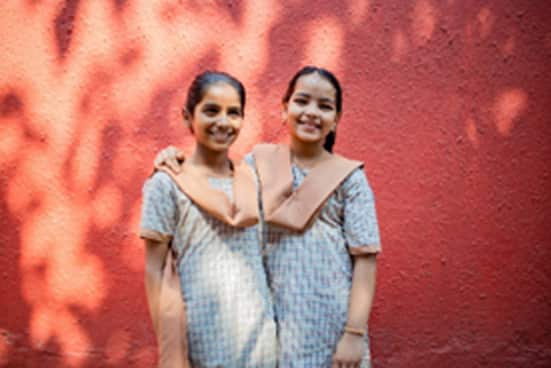
In the sophisticated philanthropic landscape of 2026, “Checkbook Philanthropy” is being replaced by “Legacy Building.” As an HNWI, your financial capacity allows you to move beyond immediate relief and toward systemic transformation. By choosing to sponsor for education through a sustained model, you are not just funding a classroom; you are architecting a “Multiplier Effect” that will resonate for generations.
The Architecture of Impact: Why Consistency Trumps Volume
One-time gifts are often reactive, addressing an immediate crisis but rarely solving the underlying cause. In contrast, a long-term commitment to sponsor for education provides the stability necessary for a child to move from foundational literacy to professional mastery.
The Compounding Effect of Educational Support
In the investment world, compounding is the key to wealth; in philanthropy, it is the key to social change. When you commit to a long-term sponsorship, you ensure that a child does not drop out during the vulnerable transition from primary to secondary school. Studies in 2026 show that sustained educational support increases a child’s future earning potential by up to 20% for every additional year of schooling completed. By the time they reach adulthood, a sponsored child is 3x more likely to hold a white-collar job, effectively ending the cycle of poverty for their entire lineage.
Breaking the Intergenerational Poverty Trap
For HNWIs, the goal of giving is often “Solvability”—addressing a problem so thoroughly that it ceases to exist. A sustained sponsor for education model is a surgical tool for this purpose. By ensuring a child reaches university or vocational excellence, you are creating a “First-Generation Earner.” This individual will, in turn, fund the education of their siblings and future children, meaning your single intervention has permanently removed an entire family tree from the poverty rolls.
Selecting Your Vehicle: The Role of a Strategic NGO for Education
To achieve these results, the choice of partner is paramount. In 2026, HNWIs are increasingly discerning, moving away from broad-based charities toward a specialized NGO for education that offers radical transparency and data-backed results.
Radical Transparency and Tech-Enabled Tracking
Modern philanthropy demands the same level of reporting as a private equity fund. A top-tier NGO for education now utilizes AI-powered dashboards and blockchain-verified tracking to show you exactly where your capital is deployed. Whether it is a new STEM lab in a rural district or a scholarship fund for aspiring female engineers, you can track learning outcomes and attendance metrics in real-time. This “Evidence-Based Giving” ensures that your generosity is never wasted on administrative overhead.
Personalized Philanthropy
For the HNWI, an NGO for education can offer “Bespoke Impact.” You may choose to focus your sponsorship on specific high-growth fields—such as AI, Renewable Energy, or Healthcare—ensuring that the students you support are equipped for the 2026 economy. This alignment between your personal values and the student’s career path creates a deeper, more meaningful connection than a generic donation ever could.
Comparative Analysis: Transactional Giving vs. Sustained Sponsorship
The following table outlines why HNWIs are shifting their strategy toward sustained models in 2026.
| Metric | One-Time Donation (Transactional) | Sustained Sponsorship (Strategic) |
|---|---|---|
| Primary Goal | Immediate Relief | Generational Transformation |
| Learning Outcome | Minimal / Unknown | High (K-12 + Professional Prep) |
| Donor Connection | Brief / Anonymous | Deep / Relational (Letters & Updates) |
| Predictability | Budget-Dependent | Reliable & Scalable Impact |
| Legacy Potential | Short-Term Recognition | Permanent Human Capital Creation |
The HNWI Advantage: Leveraging Network and Knowledge
As a leader in your field, your value to an NGO for education extends far beyond capital.
Mentorship as a Catalyst
In 2026, the “Social Capital” you provide is as transformative as your financial aid. Many HNWIs now participate in “Virtual Mentorship” programs facilitated by their chosen NGO for education. Sharing your business acumen or providing career guidance to a high-potential student provides them with a roadmap to success that money alone cannot buy.
Creating a “Living Legacy”
Sponsorship is also a tool for family governance. Many HNWIs involve their children and grandchildren in the process of choosing which students to sponsor for education. This teaches the next generation of your family about social responsibility, impact measurement, and empathy, ensuring that your family’s values endure as long as your wealth.
Conclusion
The transition from a donor to a patron is marked by a shift in perspective: from seeing an expense to seeing an investment. In the 2026 economy, there is no asset more valuable than human capital. By choosing to sponsor for education and partnering with a transparent NGO for education, you are doing more than “giving back.” You are investing in a future where the cycle of poverty is replaced by a cycle of opportunity—a legacy that will truly ripple through generations.